Severance Isn’t Sci-Fi. It’s a Workplace Warning

Stock Photo by Sidde
Adam Scott has a funny habit of starring in TV shows that tell the truth about how we feel at work.
First, there was Parks and Recreation, where bureaucracy was frustrating but hopeful. Then, The Good Place, where he literally worked in the Bad Place. Now, in Apple TV’s Severance, Scott plays Mark S.—a man who literally splits himself into separate people to do his job.
It’s not a subtle metaphor. And maybe that’s exactly why Severance has become so popular—and Emmy Award-winning. The show’s critical acclaim isn’t just about strong writing or acting. This story feels familiar and resonates with a lot of people.
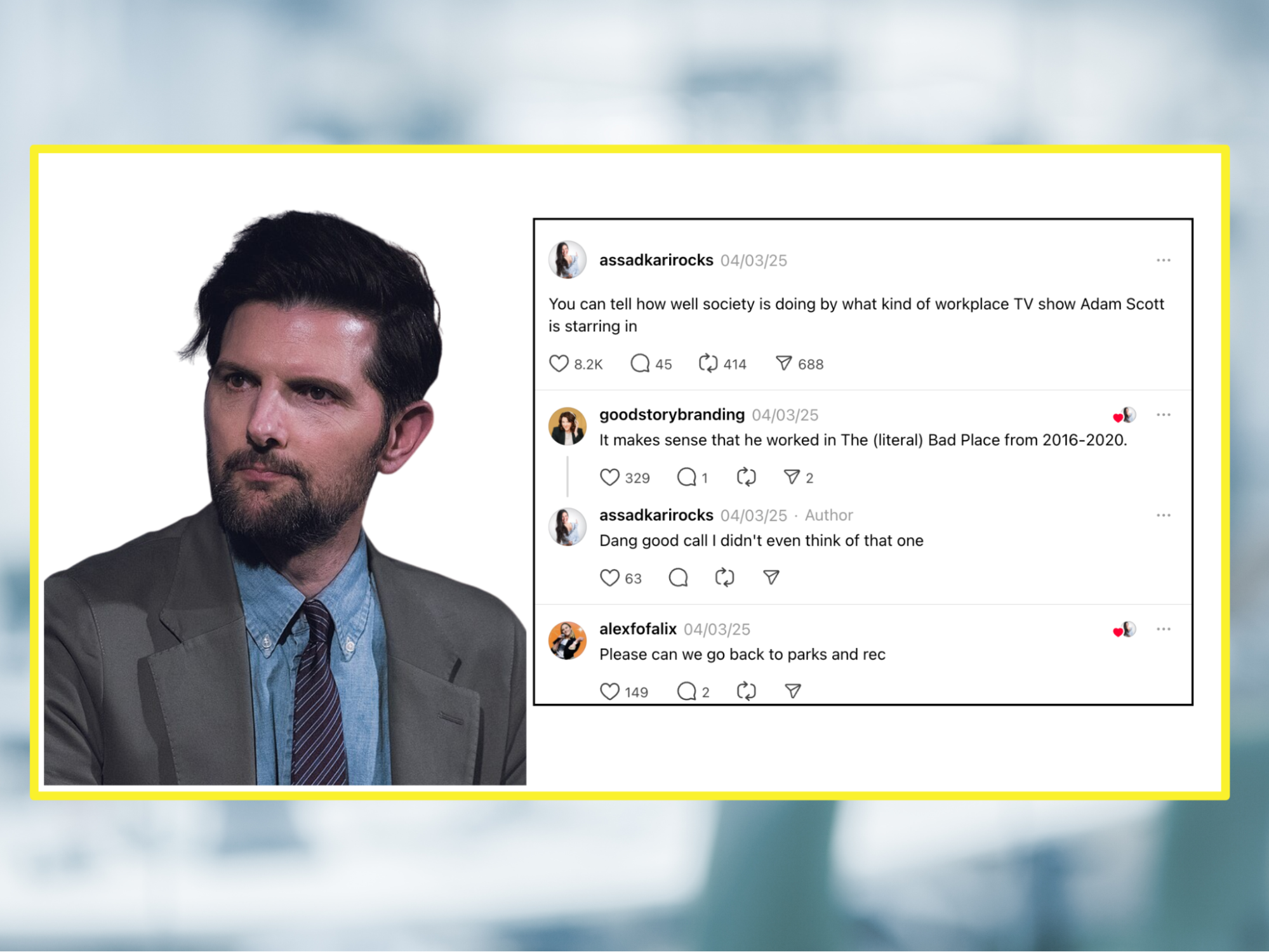
Design Created for Melissa Doman LLC | Photo of Adam Scott Courtesy of Wikicommons
Set inside the fictional Lumon Industries, Severance takes work-life balance to an extreme. Employees agree to undergo severance, a surgical procedure that uses memory blocking to create a strict work-life segregation. Their “innie” exists only at work. Their “outie” lives their regular lives and doesn’t remember work at all.
The idea sounds efficient. No stress bleeding over. No emotional distractions. No mess. What could go wrong? (You can picture my eye roll, can’t you?)
Each character joins this dystopian workplace experiment for a reason—steady pay, escape, or relief from grief and pain. As viewers, we watch the psychological toll unfold on both sides. The work persona suffers. The personal self doesn’t actually heal.
That tension is why the show resonates. Severance reflects how many people feel about work right now—and what corporate culture quietly asks people to give up.
“Just Leave It at the Door” Toxic Work Culture
At its core, Severance asks a chilling question: What if you really could leave your personal self at the door?
At Lumon Industries, employees are expected to show up as perfect workers. Their personal identities are entirely shut off. Yes, it’s done through a fictional surgical procedure, but the mindset behind it is very real. It’s an old-school way of doing business rooted in control. Thinking you could just leave your personal problems at the door is actually toxic culture disguised as professionalism.
Today’s reality looks different. Global uncertainty, remote work, and constant change mean life doesn’t pause when work begins. Healthy company culture isn’t built by pretending people don’t have lives. It’s built when managers know how to lead with compassion without crossing boundaries.
That’s why companies need Mental Health At Work Conversational Literacy™. It gives leaders and teams a shared language for navigating emotional reality at work—without turning managers into therapists or asking employees to expose more than they want to. It replaces the false choice between “bring nothing” and “bring everything”.
Removing the conversation entirely creates something like the Severance Macrodata Refinement team. In the show, employees don’t really understand what the work is. They’re not even supposed to ask questions. They’re scared of the company. When workers are treated as functions rather than people, Lumon thinks it can justify work pressure, emotional neglect, and urgency.
But people don’t stop being human at work. Stress, grief, caregiving demands, mental health, and neurodivergence don’t disappear when someone logs on or comes into the office.
When employees can engage fully at work and trust their organization, they’re more likely to do good work. That means creating a psychologically safe work culture and helping employees feel (and see) it. It’s not just a feel-good initiative. It’s just smart business.
A recent PwC survey showed that 95% of executives think an organization should build trust with team members because it impacts productivity and, later, revenue. However, the same study cited that 60% of employees feel that their employers trust them.
The Risks of Performative Care
At Lumon, perks are framed as rewards. Control is framed as concern. And what’s pitched as “care” feels superficial because it lacks structural support.
In the show, the Wellness Room sounds like an employee resource—until it becomes emotionally manipulative rather than genuinely supportive. But this isn’t just fiction. In workplaces today, when wellbeing initiatives aren’t tied to real support, employees see through the optics.
Here’s what real data shows about the gap between performative care and meaningful wellbeing:
Only about 23% of employees strongly agree their organization supports their overall well-being, even though most want it.
80% of employees say their organization could do more to support mental health.
And when employees feel their employer genuinely cares about well-being, satisfaction is significantly higher.
Then there are the incentives: a Waffle Party, desk trinkets, or small prizes for meeting goals. While 90% of employees find recognition motivating (IRL, not in the show), when these incentives exist in a vacuum, they come off as hollow and played for laughs.
This doesn’t minimize good intentions—it sharpens the distinction between feel-good perks and structural support. Cookie-cutter incentives like snack bars, celebratory events, or novelty awards may feel fun in the moment, but they don’t move the needle on trust, psychological safety, or sustained engagement. In the show’s case, we see it lead to deadly or even detrimental results.
What Severance Gets Right About Mental Health at Work
Severance makes one thing clear: ignoring employees’ mental health needs doesn’t make them disappear.
In Lumon’s world, emotional reality is denied, trust breaks down, and morale plummets. That’s not just dramatic fiction—it mirrors what happens when workplaces focus on optics rather than outcomes.
But beyond the show's satirical commentary, there are real takeaways your organization can act on now. Here are five practical insights grounded in workplace mental health evidence and best practice:
Psychological safety is foundational—not optional
When people feel they can show up without fear of judgment or penalty, collaboration improves, conflict becomes constructive, and teams sustain high performance.Meaningful support beats superficial perks
Employees want support they can actually use—like flexible schedules, access to mental health care, and workload practices that reduce chronic stress — rather than social-media-friendly trinkets or, even, waffle parties.Shared vocabulary builds connection and trust
Without a shared language to talk about stress, boundaries, emotional reality, and support needs, teams fall back on silence or confusion. Skills like Mental Health At Work Conversational Literacy™ help normalize communication without overexposure or manager-as-therapist dynamics.Well-being is structural, not cosmetic
Real workplace wellbeing isn’t like Lumon’s “Wellness Room”—it’s the thoughtful design of work itself: predictable schedules, clear role expectations, reasonable workloads, and leadership behaviors that model respect for boundaries.Investment in mental health is strategic
When employees feel genuinely cared for—not just “entertained”—organizations see higher engagement, improved retention, and stronger discretionary effort. That’s good for people and the bottom line.
These actionable lessons take the insight of Severance beyond metaphor and into the realities of workplace culture that matter every day.
Healthy organizations don’t require people to leave their personhood at the door. Instead, they meet employees where they are with real support, shared language, and lasting structural care.
If your organization is ready to move beyond performative wellbeing and build real, sustainable mental health support into how work actually happens, it starts with skill-building—not slogans.