The Cost of Workplace Conflict on Leadership Mental Health

Free Use Stock Photo by Yan Krukau
Let’s be honest: Leaders, not just individual contributors, absorb conflict all day, and this constant barrage of challenges can affect managers’ mental health.
Conflict can naturally arise when a group of adults interacts, especially at work, where misunderstandings or poor communication are bound to happen. We bring different opinions, personalities, or even inherent biases to what we say and do, even in the office.
It's when behavior goes unchecked that it stirs up a conflict cocktail that can impact workplace trust and manager effectiveness. And that's just the tip of the iceberg.
Workplace Incivility Is a Business Issue
This year, shocking no one, we saw an increase in “workplace incivility”— a lack of respect and empathy among peers, as well as rude behavior. This might look like adverse social behaviors like gossiping, bullying, or cliqueishness. And while butting heads happens, workplace incivility goes beyond an unfriendly moment. Unchecked over time, this behavior can grow into true workplace conflict that feeds into the rest of your organizational culture, harming collaboration and psychological safety across teams.
Seventy-four percent of employees say they're experiencing incivility at work today, and the results are pricey. Workplace incivility costs the U.S. $2.1 billion per day as employees feel mentally stretched between focus mode and emotional stress.
Employee turnover is more likely in an uncivil work environment. As people leave, employee satisfaction plummets, and remaining team members absorb additional work. It sets the perfect stage for employee burnout, resentful behavior, and diminished organizational trust.
This isn’t just water cooler gossip to sweep under the rug. It becomes an issue that impacts organizational performance and employee experience.
We Can’t Expect Leaders to Solve Interpersonal Conflicts without Absorbing Added Stress
In an ideal situation, when conflicts happen at work, team members will escalate the issue to managers or HR professionals to solve it. But we’re human. If someone holds a grudge or a bad opinion of a coworker, professionalism can slip, leading to passive aggression or downright rudeness.
This still happens, even among adults. Employees expect managers and leaders to fix these situations, seeing them as “conflict resolution firefighters.” We don’t like to admit the obvious: We’re all adults working together on a team. We can’t expect managers and higher-ups to control every individual’s behavior.
Yes, policies and practices can help guide leadership in maintaining or influencing behavior, and we all bear responsibility for our actions. We bring our own coping mechanisms and make our own decisions at work. As much as leadership tries to help others find a middle ground, it can be an uphill battle—especially if both parties refuse to see eye to eye. We can’t expect these actions or emotions not to impact the leadership we turn to for guidance or solutions.
Leaders can’t be expected to deliver clarity, fairness, and reasonable accommodations if they’re running on fumes.
When leaders are affected, they can’t make the best decisions for the team. And without resources or understanding to support a manager’s mental health needs while they absorb employee conflict, managers might experience:
Emotional exhaustion
Reduced cognitive capacity
Heightened stress reactivity
Decision fatigue
Declining psychological safety within their own role
Why Conflict Management Training Needs Psychological Resources
Conflict resolution isn’t just logistical—it’s emotional. When leaders face chronic tension, their emotional capacity shrinks, and interpersonal friction drains their mental health at work.
The irony? Leaders are asked to show openness, transparency, collaborative problem-solving, and Radical Candor while receiving none of that social support themselves.
We know that leadership needs effective training to handle disputes on their team. However, Development Dimensions International research found that 49% of leaders lack strong conflict-management skills, and only 12% managers were rated as effective arbitrators. There’s a gap here. The corporate world seems to forget that while leaders are expected to manage all conflict types, they're rarely supported in the toll it takes on them, leading to broader mental health impacts. It then influences how they show up at work and even how they manage conflict going forward. The tools we offer our leaders can help them manage mental strain and set an example for their team.
Without emotional intelligence and regulation skills, even well-trained leaders default to avoidance, reactivity, or over-control. The Workforce Institute points out that managers impact 69% of employees’ mental health.
Front-line managers have had a greater impact than doctors (51%), therapists (41%), and spouses or partners (69%). Imagine the organizational change a well-equipped leader can make for a team.
By making leaders more self-confident mental health advocates, managers then have stronger emotional capacity, empathy, and a clearer perspective. The skills that leaders need to help address employee conflicts.
When we pair interpersonal conflict training with resources for managing emotional safety, you help managers recognize their emotional needs and their influence on their team.
Ways to Add Emotional Skills to Conflict Resolution Training
Traditional manager training often treats conflict management as an isolated skill to be learned through impersonal training modules. It overlooks that leaders are human, with their own work-related stress and emotional limits.
Leaders who are stressed, anxious, exhausted, or overwhelmed can't deliver stability to others. Workplace conflict resolution frameworks can help managers practice active listening, mediation skills, and real-time de-escalation tactics. Still, organizations need to include education to help leaders understand their own emotional intelligence and regulation when experiencing and mitigating conflict for others. Leaders can’t resolve chronic incivility without conflict resolution training and personal mental health strategies.
I don't mean just providing wellness and meditation apps, but teaching the vocabulary and mental tools to help them channel team discontent into healthy conflict. Here are some ways we can equip leaders better to do this:
Conflict Management Training
Incorporate training programs for constructive conflict resolution, intentional communication, and a feedback culture. This gives leaders practical skills to address interpersonal disputes early and maintain psychological safety in teams.
Leadership Resources to Understand Personal Psychological Stress
Recognize that mental health support for people in positions of influence is just as critical as support for employees. Tools like Mental Wellbeing Non-Negotiables™ help leaders prioritize what's important to them so they can bring their best selves to work each day.
Create Clear Policies and Protocols
Develop conflict management systems, policies, and norms that reinforce respectful behaviors. This might include escalation paths, mediation processes, and expected behaviors. This reduces role ambiguity, allowing leadership to act confidently rather than reactively.
Embed Stress-Management Practices Into Leadership Routines
Encourage daily practices such as brief reflection before meetings, more mindful breaks, and workload check-ins. Leaders who maintain their own mental well-being are better positioned to lead teams through organizational dysfunction, adding to stress or burnout.
Monitor and Measure Impact
Use an anonymous participant pulse survey to assess team dynamics and leadership capacity. Data enables organizations to identify friction points early, adapt strategies, and ensure that mental health resources effectively support leaders.
By integrating emotional edition with conflict analysis, organizations create an environment where leaders can confidently navigate workplace conflict while maintaining their own mental health at work, ultimately supporting stronger team outcomes and organizational adaptability.
What to Do Next to Support Leadership Mental Health
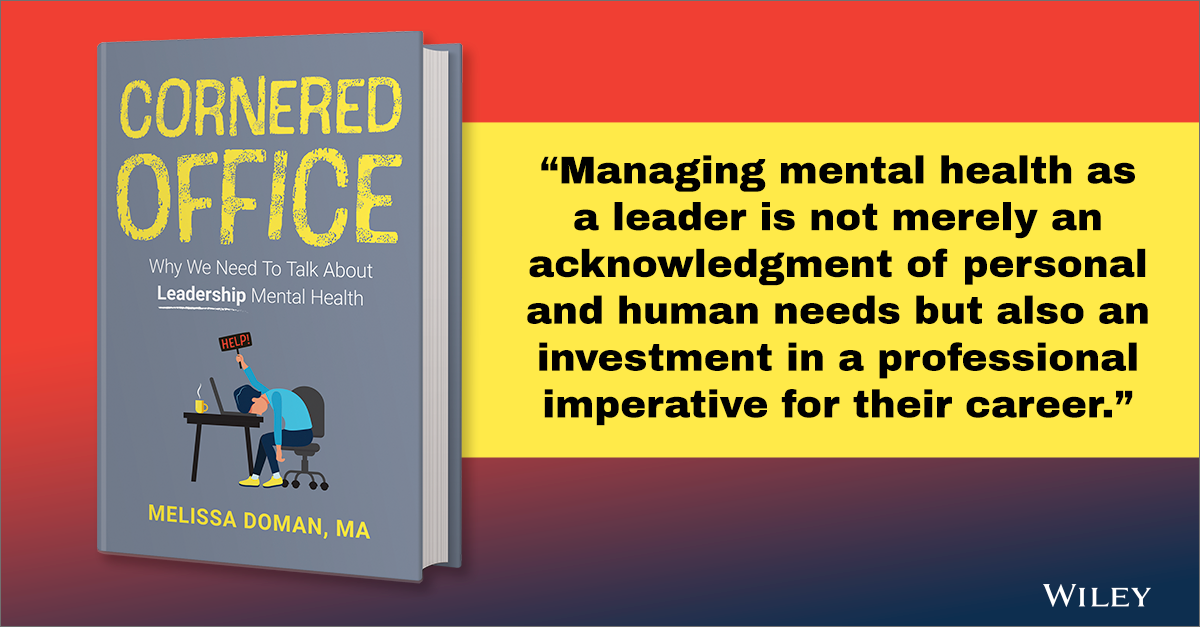
Graphic of Melissa Doman LLC via John Wiley & Sons Publishing
It’s time to take action. Invest in leader wellbeing and provide robust support systems that empower them to manage conflict effectively, and not at the expense of their mental health.
Strengthen your organization's foundation by equipping leaders with both conflict skills and dedicated emotional health resources.
If you're looking for actionable ways to support the mental health of your leadership team so they can effectively engage to enhance conflict management throughout your organization, I invite you to explore my book:
Cornered Office: Why We Need to Talk About Leadership Mental Health.
You can also partner with me for an Intentional Communication & Constructive Conflict Workshop, where your team will gain practical tools to resolve workplace tensions and enhance communication.
Book a session or learn more about my approach to workplace mental health consulting here.